Outdoor flooring is often approached as a finishing layer, something selected once the structure, planting, and layout are already resolved. In practice, I treat it as a primary architectural decision, one that quietly dictates how the space is used, how it feels underfoot, and how it performs over time. The surface you walk on is not simply visual. It defines the experience of being outdoors.
From a planning perspective, flooring establishes movement and flow. The size, orientation, and jointing of materials guide how people naturally circulate through a garden or terrace. I’ve found that larger-format slabs, for instance, tend to slow movement and create a more composed, deliberate pace, whereas smaller units or loose materials introduce a more informal, transitional rhythm. These subtle cues shape how a space is inhabited without ever being explicitly noticed.
Equally, comfort underfoot becomes a daily consideration, particularly in climates with strong sun exposure or fluctuating temperatures. Some materials retain heat to an extent that makes them uncomfortable during peak hours, while others remain comparatively cool or develop a softer, more forgiving surface over time. This is not a minor detail. It determines whether a space is genuinely usable or simply admired from a distance.
There are also technical aspects that are often overlooked in early decisions, particularly heat retention and drainage. Dense materials such as concrete or dark stone can store and radiate heat well into the evening, altering the microclimate of the space. Similarly, poor drainage planning beneath visually appealing finishes can lead to standing water, staining, or long-term structural issues. These are not failures of materials themselves, but of how they are selected and integrated.

I have seen projects where flooring was chosen almost entirely for its appearance, often inspired by a photograph rather than the realities of the site. In many of those cases, the result was predictable: surfaces that became too hot to walk on, decking that weathered unevenly due to exposure, or layouts that disrupted rather than supported movement. The visual intention may have been strong, but the lived experience fell short.
This comparison is structured differently. It is grounded in real applications, site conditions, and long-term performance, not showroom appeal. The aim is not simply to identify what looks best, but to clarify what works, where, and why, so the final decision supports how the space will actually be used day to day.
How to Choose the Right Outdoor Flooring (Before Comparing Materials)
Before comparing specific materials, I always step back and assess how the space will actually be used, because the right flooring is rarely about aesthetics alone. It comes down to climate exposure, foot traffic, maintenance tolerance, and how the surface will interact with light, heat, and drainage over time. I’ve found that when these fundamentals are resolved early, the material choice becomes far more precise, avoiding costly corrections and ensuring the space performs as well as it looks.
Climate and Exposure
Climate is the single most decisive factor in how outdoor flooring performs over time. I always assess sun intensity, rainfall patterns, and freeze–thaw exposure before even considering aesthetics, because these conditions directly affect expansion, surface temperature, slip resistance, and long-term durability. In high-sun environments, for example, darker stone or composite decking can retain excessive heat, making the surface uncomfortable during peak hours. In contrast, regions with consistent rainfall demand materials with reliable drainage performance and textured finishes to maintain safety underfoot. Where freeze–thaw cycles occur, porosity becomes critical, as water absorption can lead to cracking and surface failure over time.
From experience, I’ve seen materials that perform exceptionally well in one climate deteriorate surprisingly quickly in another. A limestone that ages beautifully in a dry, temperate setting can stain or erode in wetter conditions, while certain timbers that remain stable in moderate climates may warp or split under intense heat. The key is not choosing the “best” material in general, but selecting the one that is technically suited to the specific environmental conditions of the site.

Usage and Load
How the space is used on a daily basis should directly inform the flooring choice, as different materials respond very differently to load, movement, and wear. I always begin by distinguishing between spaces designed for entertaining and those intended as a quiet retreat, because the demands are fundamentally different. Entertaining areas tend to involve higher foot traffic, frequent furniture movement, and the need for stable, level surfaces that can comfortably support dining tables, outdoor kitchens, or lounge seating. In contrast, quieter zones can accommodate softer, more informal materials that prioritise atmosphere over structural rigidity.
Load considerations are equally important. Heavy furniture, planters, or built-in features require surfaces with sufficient compressive strength and stability, particularly over time. I’ve seen gravel patios struggle under dining setups due to movement, while poorly supported decking can flex under concentrated weight. Households with children and pets introduce another layer, where slip resistance, surface temperature, and resistance to scratching or staining become critical. In practice, the most successful flooring choices are those that align with real patterns of use, not just the intended design concept.
Maintenance Tolerance
Maintenance is where intention and reality often diverge. Many homeowners begin with the assumption that they will regularly oil decking, reseal stone, or manage jointing, but in practice, consistency tends to drop off over time. I’ve learned to account for this gap early in the decision-making process, because the long-term appearance of any outdoor flooring is directly tied to how well it is maintained, not how it looks on installation day.
For that reason, I often advise clients to choose one level lower maintenance than they believe they can realistically manage. Materials such as natural timber or certain stones can be exceptional when properly cared for, but they demand ongoing attention. In contrast, porcelain or composite surfaces offer a more stable, predictable outcome with minimal intervention. The most successful projects are not those with the most refined materials, but those where the maintenance commitment aligns with how the space will actually be lived in over time.
Budget vs Lifecycle Cost
Budgeting for outdoor flooring is about far more than the upfront price per square metre or square foot. I always encourage clients to consider the total lifecycle cost, which includes installation, ongoing maintenance, and eventual replacement. For example, a natural stone patio like limestone may cost around £120–£180 per m² (≈$150–$225 per sq ft) installed, while a porcelain outdoor tile may come in at £70–£100 per m² (≈$85–$125 per sq ft). At first glance, porcelain appears significantly cheaper, but factoring in lifespan and durability changes the equation: a high-quality limestone patio can last 30–50 years with periodic sealing, whereas cheaper concrete or timber decking may require replacement or extensive maintenance every 10–15 years.
I’ve worked on projects where clients initially opted for low-cost timber decking to save £40–£60 per m² ($50–$75 per sq ft), only to spend a cumulative £15–£20k ($18–$24k) over a decade on replacement boards, sanding, and oiling. In contrast, investing in a slightly more expensive composite or natural stone solution often results in lower overall expenditure and far less ongoing hassle. The key lesson I share is to balance upfront cost against durability, maintenance, and realistic lifespan, ensuring the choice remains cost-effective over the long term rather than merely appearing affordable at the point of purchase.
The 7 Best Outdoor Flooring Options (Compared in Real Terms)
Choosing outdoor flooring isn’t about ticking a trend box, it’s about matching material performance to the way you live outdoors. Below, I compare the seven most effective flooring solutions across durability, texture, climate suitability, maintenance, cost, and real-world application. Each option reflects lessons I’ve learned from executed projects, showing what works (and what doesn’t) beyond showroom appeal.
Natural Stone (Limestone, Sandstone, Slate)
Natural stone exudes a sense of permanence and refinement. Its timeless, architectural quality makes it a staple for both contemporary and classic outdoor spaces, creating a grounded, elegant foundation that complements planting, water features, and furniture. Stone’s subtle variation in tone and texture adds visual depth without overwhelming the design.
Real-Life Application
In one project, I specified limestone patios for a full-sun garden. The light, soft hue not only reduced glare but also created a cooler, more comfortable surface for barefoot walking during summer months. The natural veining and tonal variation brought a subtle sophistication that worked harmoniously with the surrounding planting.
Typical Sizes
- 600×900 mm (24×36 in) slabs are common for patios, allowing a balanced scale that guides movement without interrupting the visual flow.
Pros
- Highly durable and long-lasting
- Ages beautifully, developing character over time
- Adds strong resale and aesthetic value
Cons
- Higher upfront cost compared with alternatives
- Some types require periodic sealing to protect against staining
- Can be slippery if the surface finish is too smooth or untreated
Contractor Insight Installation requires a properly prepared base and careful jointing to prevent movement or cracking. Choosing the right finish (brushed, honed, or natural cleft) is critical for balancing slip resistance with appearance.
Porcelain Outdoor Tiles
Porcelain outdoor tiles offer precision, consistency, and a sleek contemporary finish, making them ideal for modern terraces or patios where clean lines and uniform surfaces are desired. Their engineered nature allows them to mimic stone, concrete, or even wood while maintaining superior durability and minimal variation.

Real-Life Application
I frequently specify porcelain tiles when clients want indoor-outdoor continuity, such as matching interior tiles with an exterior terrace. This approach creates a seamless transition between spaces, visually extending the interior and simplifying furniture layout while maintaining a cohesive design language.
Typical Thickness
- 20 mm (0.79 in) outdoor-grade tiles, suitable for high-traffic areas and direct exposure to weather.
Pros
- Extremely low maintenance
- Resistant to stains, moisture, and UV fading
- Available in slip-resistant finishes for safety
Cons
- Can feel visually “flat” if overused or paired with minimal landscaping
- Requires a correctly prepared sub-base and professional installation to prevent cracking or unevenness
Contractor Insight
Porcelain’s rigidity demands precise leveling and jointing. I always advise using flexible adhesives and grout designed for outdoor use to accommodate thermal expansion and avoid surface tension issues.
Concrete (Poured or Pavers)
Concrete is a minimal, architectural, and highly adaptable solution. Its clean, neutral appearance provides a disciplined backdrop for furniture, planting, and water features, making it ideal for contemporary courtyards or terraces. With thoughtful finishing, it can feel both modern and warm, despite its inherent austerity.
Real-Life Application
In a modern courtyard project, I specified brushed concrete to achieve a refined, uniform surface while keeping the budget under control. The finish softened the surface visually and tactically, allowing planting and outdoor furniture to stand out without overwhelming the space.
Typical Thickness
- 100–150 mm (4–6 in) for poured slabs, reinforced as required for heavy use
- Pavers: typically 50–80 mm depending on load requirements
Pros
- Cost-effective compared with natural stone
- Highly customizable in texture, colour, and joint pattern
- Durable under heavy foot traffic and furniture loads
Cons
- Prone to cracking without proper jointing and base preparation
- Can feel hard or stark if not softened with landscaping or timber accents
Contractor Insight
Concrete requires careful planning for expansion joints and drainage. Brushed or scored finishes can enhance slip resistance and add subtle visual interest, preventing the surface from feeling monolithic.
Timber Decking (Hardwood & Softwood)
Timber decking has a warmth that few other outdoor surfaces can match. It feels tactile, human-centred, and naturally inviting, which is why I often turn to it when a space needs to feel softer and more relaxed. It also introduces a visual lightness that helps balance planting, masonry, and harder architectural elements, especially in gardens where a more natural, lived-in character is the goal.
Real-Life Application
I’ve found timber decking works particularly well for raised terraces and uneven sites, where it helps create a level, usable surface without the heaviness of concrete or stone. In one project, it solved a difficult level change while also making the seating area feel more intimate and approachable. The material brought warmth to the scheme and reduced the visual severity of the structure beneath.
Typical Board Width
- 90–140 mm (3.5–5.5 inches) wide boards are common for decking, with wider boards creating a calmer, more expansive look and narrower boards adding more rhythm and texture.
Pros
- Comfortable underfoot, especially in warmer months
- Develops a natural ageing character that many clients value
- Visually softens outdoor spaces and blends well with planting
Cons
- Requires regular maintenance, including oiling or sealing
- Susceptible to weathering, movement, and surface wear over time
Contractor Insight
Timber decking performs best when detailing is precise. I always pay close attention to ventilation beneath the boards, correct spacing, and drainage, because poor installation quickly leads to cupping, swelling, or premature deterioration.
Composite Decking
Composite decking is the controlled, low-fuss alternative to timber. It offers a more consistent visual finish, with a cleaner and more predictable appearance over time, which makes it especially useful in schemes where the client wants the warmth of wood without the maintenance burden that usually comes with it. In design terms, it gives you the timber mood, but with far less unpredictability.
Real-Life Application
I often recommend composite decking when clients want the look of timber but do not want to commit to ongoing oiling, sealing, or regular refinishing. It is particularly effective in family gardens, rental properties, and secondary outdoor areas where durability and ease of care matter more than natural weathering.
Typical Lifespan
- Around 15–25 years, depending on product quality, installation, and exposure conditions.
Pros
- Low maintenance
- Resistant to rot and insect damage
- Consistent appearance across the full surface
Cons
- Can look artificial in certain light
- May retain heat in direct sun, especially darker tones
Contractor Insight
Composite performs best when details are handled carefully. I always look closely at board spacing, ventilation, and manufacturer recommendations for fixing, because even a high-quality product will disappoint if the substructure is poorly planned.

Gravel and Loose Aggregate
Gravel and loose aggregate create an informal, relaxed, and landscape-driven feel, perfect for transitional spaces, pathways, and secondary patios. Unlike rigid surfaces, they integrate naturally with planting and topography, softening hard edges and adding subtle texture underfoot.
Real-Life Application
I’ve used gravel extensively in transitional garden zones to manage budget constraints while improving drainage. In one project, it allowed a seamless connection between a lawn and a raised timber terrace, reducing runoff issues without the need for costly sub-base work. Its adaptability makes it ideal for curving paths or irregularly shaped plots.
Typical Depth
- 40–50 mm (1.5–2 in) of compacted aggregate over a stabilising sub-base is usually sufficient to prevent excessive shifting.
Pros
- Highly affordable compared with stone or timber
- Excellent drainage, reducing puddling and water-related issues
- Flexible and easy to adjust or extend
Cons
- Shifts underfoot and can be uncomfortable for barefoot use
- Unsuitable for heavy furniture unless stabilised
- Requires defined edging to maintain neatness
Contractor Insight
Proper sub-base preparation and edge restraint are crucial. Without these, gravel spreads into planting beds or paths erode over time. I also advise using a mixture of gravel sizes to balance drainage and walkability.
Outdoor Brick and Clay Pavers
Design Perspective
Outdoor brick and clay pavers bring a textured, traditional, and enduring quality to a garden or terrace. They carry a sense of history that feels especially persuasive in period properties, yet they can also be used to soften the harder edges of contemporary architecture. Their appeal lies in the subtle movement of tone, the tactile surface, and the way they age into the landscape rather than sitting apart from it.
Real-Life Application
I’ve found brick pavers work particularly well in period homes and softer modern schemes, where a more relaxed, lived-in surface is needed. In one renovation, they helped bridge the gap between a restored house and a newly landscaped rear garden, giving the outdoor space a stronger sense of continuity and character. That slight irregularity in finish made the whole scheme feel more settled and believable.
Typical Size
- 200×100 mm (8×4 inches) is a standard format, offering a familiar scale that suits both paths and larger terrace layouts.
Pros
- Highly durable and long-lasting
- Naturally slip-resistant due to their textured surface
- Ages with character, developing a richer patina over time
Cons
- Weed growth can appear between joints if maintenance is neglected
- Colour variation between batches can be inconsistent, which may affect visual uniformity
Contractor Insight
Brick pavers depend heavily on correct laying patterns, jointing, and edging restraint. I always pay attention to the finish of the joints, because poor detailing can quickly undermine what is otherwise one of the most charming and reliable flooring options.
Side-by-Side Comparison (Quick Decision Guide)
What I Recommend Based on Real Projects
Choosing flooring always comes down to how the space will actually be used and the environment it sits within. Based on years of working on residential terraces, gardens, and courtyards, here’s how I typically guide clients across different scenarios:
Best for Low-Maintenance Living
For homeowners who prefer to spend time enjoying their outdoor space rather than maintaining it, I consistently recommend porcelain tiles and composite decking.
- Porcelain Tiles: These are exceptionally durable, stain-resistant, and UV-stable, making them ideal for high-traffic areas and terraces that connect directly to the home. They deliver a sleek, consistent finish with virtually no upkeep beyond occasional cleaning.
- Composite Decking: Offers the warmth and texture of timber without the need for regular oiling, sealing, or sanding. It is resistant to rot, insects, and surface weathering, which makes it perfect for family gardens, pool surrounds, and secondary outdoor spaces.
Best for Luxury, Long-Term Value
When the priority is timeless elegance and lasting investment, natural stone such as limestone, sandstone, or slate is my go-to recommendation. Its architectural weight and tactile quality create outdoor spaces that feel inherently refined, while its durability ensures the floor continues to perform beautifully for decades.
- Natural Stone: Offers unmatched longevity and ages gracefully, developing a unique patina over time. It works particularly well in high-end patios, poolside terraces, and courtyards where visual impact and quality are equally important.
Best for Budget-Conscious Projects
For projects where cost-efficiency is key, I typically recommend gravel or concrete. Both materials offer durability and practicality without compromising on design potential.
- Gravel & Loose Aggregate: Affordable, flexible, and excellent for drainage, gravel works particularly well in garden paths, transitional zones, and informal patios. Its adaptability allows it to follow curves and irregular layouts while remaining easy to maintain or adjust.
- Concrete (Poured or Pavers): A cost-effective solution that can be finished in a variety of textures and colours, concrete suits modern courtyards, terraces, or high-traffic areas. Properly detailed, it provides long-term durability at a fraction of the cost of natural stone.
Best for Warm, Natural Feel
When the goal is to create an outdoor space that feels inviting, tactile, and connected to nature, timber decking is my preferred choice. Its natural grain, warmth underfoot, and subtle ageing characteristics give terraces and raised decks a human-centred quality that other materials struggle to match.
- Timber Decking (Hardwood or Softwood): Perfect for terraces, raised platforms, and areas where barefoot comfort and texture are priorities. It softens architectural edges and harmonises beautifully with planting and natural landscaping.
Common Mistakes I See When Choosing Outdoor Flooring
Even with the best intentions, I often see homeowners make choices that compromise the functionality and longevity of their outdoor spaces. These mistakes usually stem from prioritising aesthetics over practical performance.
Prioritising Looks Over Climate Suitability
Selecting a material because it looks beautiful in a showroom or magazine often backfires when exposed to the realities of the local climate. I’ve seen dark limestone scorch under intense sun, timber warp in humid regions, and stone crack under freeze-thaw cycles. Always match material properties to regional weather patterns.
Ignoring Drainage and Sub-Base Preparation
A common error is installing flooring without considering water movement and structural support. Poor drainage can cause puddling, staining, or sub-floor instability, while an inadequately prepared base leads to cracking, sinking, or uneven surfaces. I always stress the importance of engineering the sub-base before laying any surface.
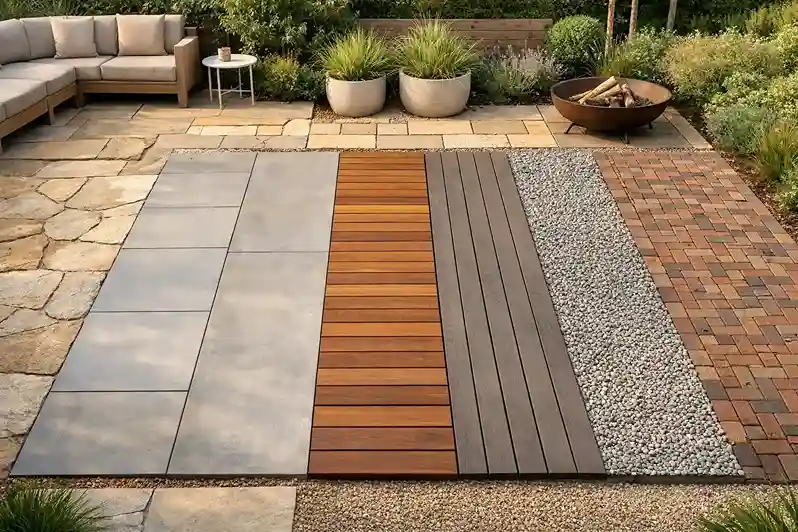
Mixing Too Many Materials
Using multiple types of flooring without a clear plan can create a visually chaotic space and disrupt circulation. I recommend limiting materials to one or two complementary options and letting transitions between them feel deliberate, not accidental. Cohesion is as important as functionality.
Underestimating Maintenance
Even durable materials require realistic upkeep. Timber, natural stone, and even some pavers need periodic attention. I often advise clients to choose one level lower maintenance than they think they can manage, because inconsistent care is the main reason beautiful floors deteriorate faster than expected.
Conclusion: Choose for How You Live, Not Just How It Looks
flooring is far more than a visual layer—it shapes how we experience the garden, terrace, or courtyard every day. The best floors aren’t those that make the boldest first impression, but those that support movement, comfort, and the way the space is genuinely used.
When deciding, focus on aligning your choice with:
- Lifestyle – how you entertain, relax, or move through the space
- Maintenance tolerance – what level of upkeep fits realistically with your routine
- Environmental conditions – climate, sun, rain, and drainage requirements
From my experience, a thoughtfully chosen surface transforms an outdoor area into a functional, inviting extension of the home, rather than a decorative afterthought. The right floor feels effortless underfoot, complements the surrounding landscape, and remains resilient over time—creating spaces that are both beautiful and enduring.