In 2026, the bathroom is one of the first rooms homeowners are putting money into, and a general contractor like San Diego Service Group can help bring the vision to life. Some of what’s trending has real staying power. Some of it will look dated in five years. This article covers both.
Scroll down to explore some of the top bathroom remodeling trends that you should know in 2026.
The Spa Bathroom is Now the Standard, Not the Upgrade

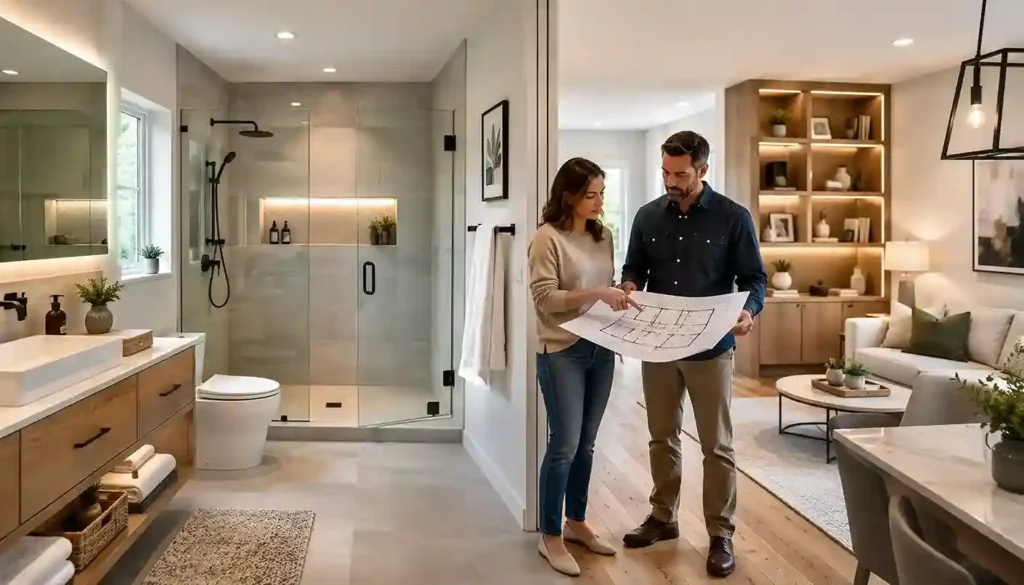
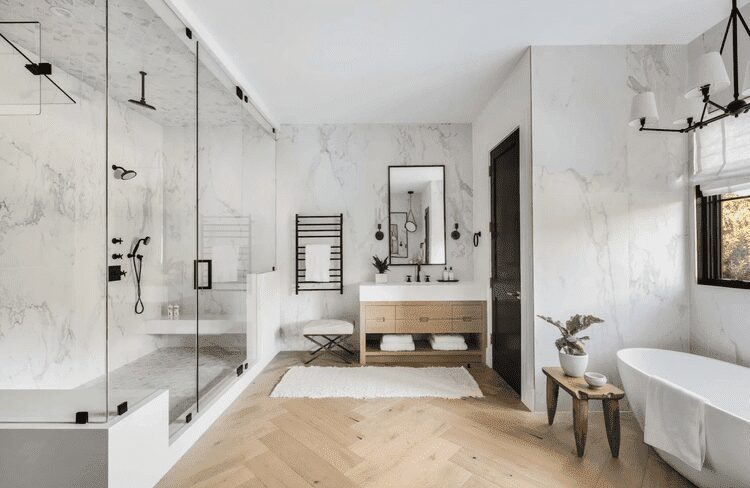
These used to be the things you’d see in a hotel and wish you had at home. In 2026, they’re the baseline expectation for a primary bathroom remodel:
- Walk-in showers with rainfall heads
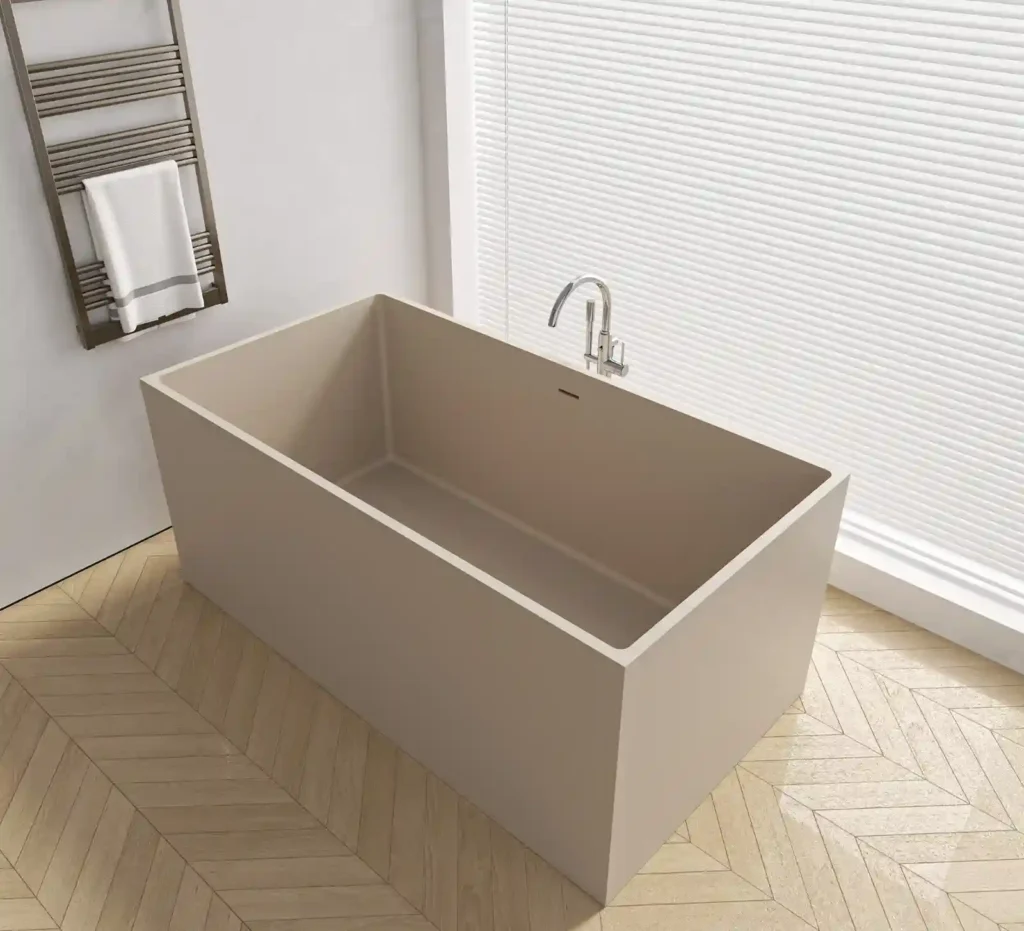
- Soaking tubs with ergonomic backrests
- Heated floors
- Hydrotherapy features and thermostatic controls
The shift makes sense. People are spending more time at home and paying more attention to daily routines. The bathroom is one of the few spaces in the house where you’re genuinely alone, and homeowners are starting to treat that as worth designing around.
The honest take: This trend has real legs. Spa-inspired features consistently rank among the top ROI upgrades in bathroom remodeling, and they appeal broadly enough that they won’t feel niche in a resale context.
Just don’t confuse “spa-inspired” with “expensive for its own sake.” A well-placed rainfall showerhead and heated tile floor will do more for the daily experience than a freestanding tub shoved into a space that doesn’t have room for it.
Warm, Earth-Toned Palettes Are Replacing Cool Neutrals

The cold, gray, and white bathroom had a long run. It’s winding down. Earth-inspired tones are taking over as the dominant palette in 2026 bathroom design, and the transition is noticeable across designers, remodelers, and homeowners alike.
The shift toward warm makes practical sense, too:
| Cool Neutrals | Warm Neutrals |
| Show water spots easily | More forgiving on surfaces |
| Feel stark in low light | Flattering in natural light |
| Pair narrowly with materials | Work with a wider range of finishes |
| Dating quickly in 2026 | Aging well across styles |
The honest take: This one has staying power precisely because it isn’t bold. Earth tones don’t date quickly. They’re not a statement in the way that an all-black bathroom is a statement. They’re a foundation.
If you’re choosing a palette for a remodel you expect to live with for 10 years, warm neutrals are the lower-risk, higher-reward call compared to the cool grays that dominated the last decade.
Quiet Luxury Over Loud Design

Quiet luxury, sometimes called “stealth wealth” in interior design circles, is the idea that real quality doesn’t need to announce itself. In bathrooms, this means premium materials with minimal branding, clean lines, and craftsmanship you notice by touch rather than by price tag.
In practice, it looks like this:
- Honed stone over polished marble
- Matte fixtures over chrome
- Integrated storage over open shelving stacked with matching products
- Surfaces that reward a closer look rather than demanding attention from across the room
The honest take: This is one of the more durable trends in the current cycle, partly because it’s a reaction to the maximalism and Instagram-optimized design of the early 2020s. Rooms built around this principle tend to age well because nothing in them is trying too hard.
The risk is that quiet luxury tips into “expensive but boring” if there’s no texture or warmth to anchor it. The best versions combine restraint with material richness: stone that has character, wood that has grain.
Tile as the Room’s Main Event

Tile has stopped being the background. In 2026, it’s frequently the whole point of the room, and the range of what people are doing with it right now is wider than it’s been in a long time.
Popular directions include:
- Zellige — handmade Moroccan tile with a slightly irregular, reflective surface that ages beautifully
- Floor-to-ceiling tiling — the same tile running continuously across all surfaces for a seamless, immersive feel
- Vintage hand-painted styles — artisanal, Delft-inspired motifs that feel collected rather than installed
- Microcement finishes — an ultra-thin coating applied over existing tile that eliminates grout lines entirely
The honest take: This is where the trend splits into two camps. Zellige and handmade artisanal tile have genuine craft behind them and tend to look better as the material ages. Bold graphic tile and high-contrast geometric patterns are more of a moment, and some combinations are already starting to feel familiar.
If you’re tiling a bathroom you expect to sell in three to five years, lean textural and artisanal. If you’re tiling a bathroom you’ll live in for 15 years, and you love pattern, do what you want. Good design is personal.
Lighting Gets Taken Seriously
For most of bathroom design history, lighting meant a bar of bulbs above the mirror and maybe a recessed light in the shower. In 2026, that’s finally being recognized as the bare minimum.
What a properly layered bathroom lighting plan looks like:
| Layer | Purpose | Examples |
| Ambient | General illumination | Recessed dimmable ceiling lights |
| Task | Functional, shadow-free light | Sconces flanking the mirror |
| Accent | Mood and depth | LED strips under vanities, backlit mirrors |
| Statement | Visual focal point | Sculptural pendants above tubs or vanities |
The honest take: This is an underrated upgrade relative to its cost and impact. Lighting changes how a room feels more than almost any other single element, and bathrooms have been chronically underlighted for decades.
If you’re doing a remodel and looking for places to trim the budget, lighting is not the place. The visual return per dollar is higher here than almost anywhere else in the bathroom.
Floating Vanities and the Death of the Builder-Grade Cabinet

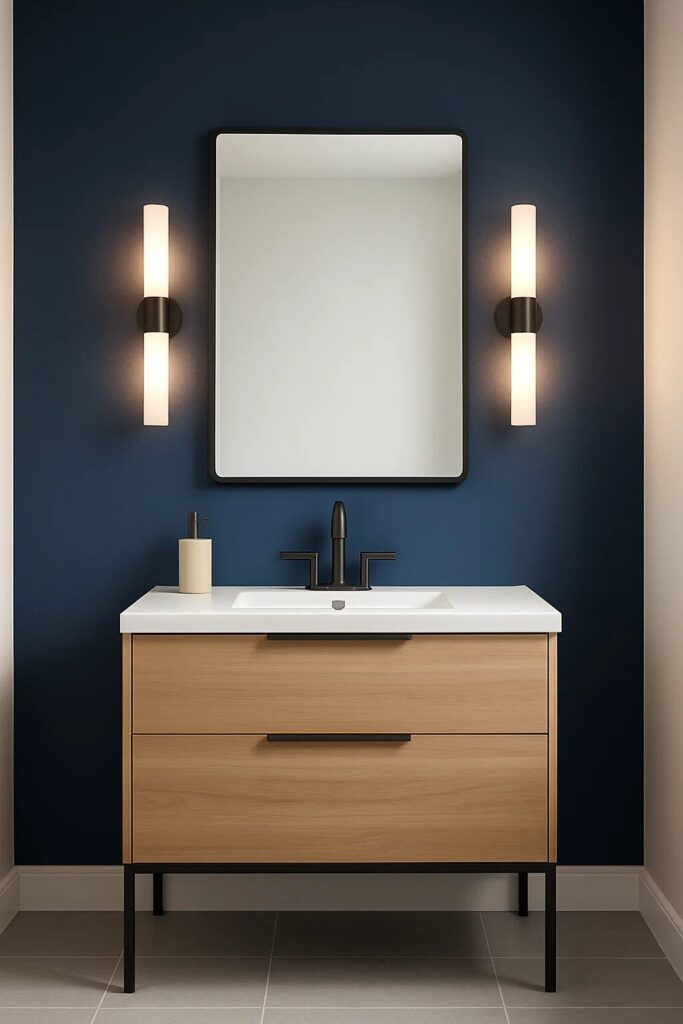
The chunky, floor-mounted vanity with a laminate top and recessed panel doors is on its way out. Floating vanities have been climbing for a few years, and in 2026, they’re the default choice in any remodel that takes design seriously.
What makes them work:
- Wall-mounted installation creates visual floor space, making even small bathrooms feel larger
- Clean, handle-free fronts in matte finishes, wood veneer, or lacquer
- Integrated or undermount sinks that eliminate the visual clutter of a vessel or drop-in
- Under-vanity LED strips that add ambient light and reinforce the floating effect
The honest take: This isn’t just an aesthetic upgrade. A floating bathroom vanity also makes the floor easier to clean, which is one of those practical wins that sounds boring until you’ve lived with it. The main risk is storage. Floating designs tend to prioritize looks over cabinet depth, so if you’re a person who needs a lot of bathroom storage, plan around that before committing.
Smart Technology That’s Actually Useful

Smart bathroom technology has been “the next big thing” for long enough that it’s worth separating what’s actually stuck from what’s still looking for a use case.
| Worth the Investment | Skip It |
| Thermostatic shower systems | App-controlled everything |
| Voice-activated lighting | Ceiling-integrated bathroom speakers |
| LED mirrors with ambient controls | Smart toilets with 12 features you’ll use once |
| Touchless faucets | Heated mirror demister (nice in theory, rarely used) |
The honest take: The technology worth investing in removes friction from something you do every single day. A thermostatic valve that remembers your preferred shower temperature is useful every morning. A mirror that reads you the news while you brush your teeth is a party trick.
The test is simple: does this make my daily routine better, or does it just make the listing description longer? Buy the former. Skip the latter.
Wrapping Up
The thread connecting most of these trends is the same: bathrooms are being designed as spaces people actually want to spend time in, not just move through. That shift is driving the push toward spa features, better lighting, warmer materials, and more considered layouts.
The trends with staying power are the ones rooted in that logic. Craftsmanship over novelty. Warmth over starkness. Function that improves daily life over features that photograph well once.
If you’re planning a remodel, use these trends as a filter, not a checklist. The bathrooms that hold up over time are the ones built around how people actually live in them.