You have an underused room, a basement corner, or a spare closet that is gathering dust. You want a space to relax and host friends, but standard “man caves” or home bars often feel generic, cluttered, or overly bright. You crave mystery, sophistication, and a space that feels like a genuine escape from the modern world.
Key Takeaways: The Speakeasy Formula
- The Rule of Light: Avoid ceiling lights entirely. Use 2200K bulbs (Candlelight) only.
- The Secret: A true speakeasy requires a hidden entry (bookcase or panel), not just a standard door.
- The Hardware: Standard hinges fail on heavy hidden doors. You must use Pivot Hinges to prevent sagging.
- The Air: Windowless rooms require negative pressure ventilation to safely remove smoke and stale air.
Creating a speakeasy at home requires more than just buying a bar cart and some whiskey. It requires controlling the environment—specifically light, sound, and entry—to manufacture a specific mood. This guide cuts through the noise to give you the practical “ingredients” for building a functional, authentic speakeasy-style room.
The Allure of Speakeasy Style Bar Concepts
Why do we love the speakeasy vibe? It offers a complete sensory shift. The original speakeasies were born from necessity during Prohibition; they had to be hidden, quiet, and dark. Today, we replicate this design to create privacy. Your design should feel enclosed and intimate.
“Moody Box” Aesthetic
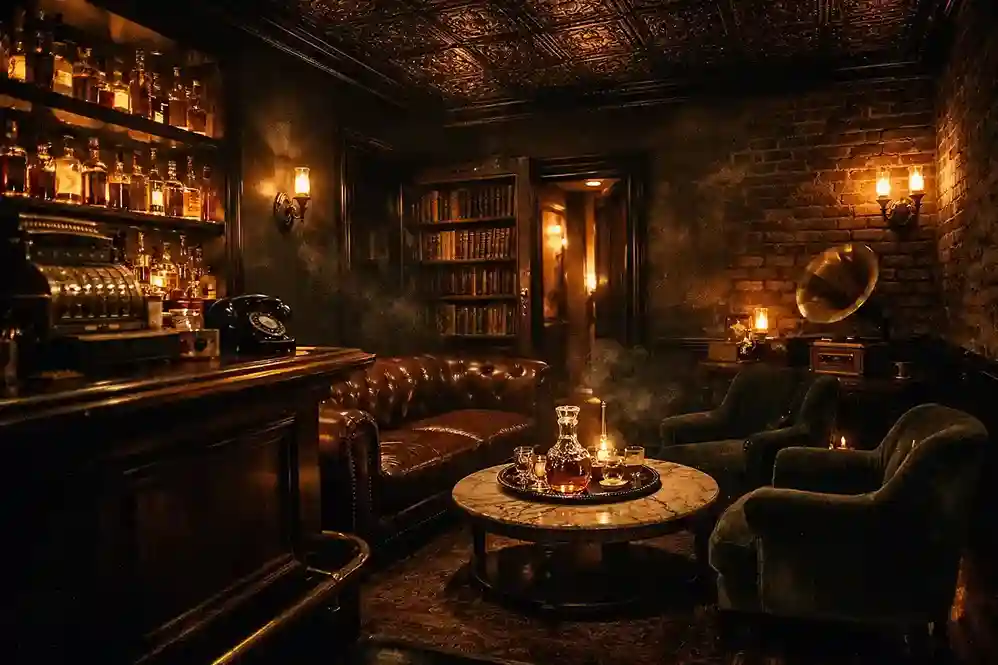
To get the look right, you must commit to darkness. This idea focuses on enveloping the guest in deep, rich tones that blur the edges of the room, making small spaces feel infinite rather than cramped.

Modern Speakeasy Touches (Ventilation & Safety)
You want the look of 1920, not the stale air. If your room is in a windowless basement, ventilation is critical. Do not rely on a standard air purifier. You need negative pressure ventilation—an inline exhaust fan that sucks air out of the room directly to the outdoors to prevent CO2 and smoke buildup.
Key Elements of Speakeasy Design
If you don’t get the structure right, the decor won’t matter.
Hidden Entrance
The entrance sets the stage. If the door looks like a normal bedroom door, the illusion is broken. A hidden bookcase door is the gold standard, offering both utility (storage) and the “wow” factor of a secret reveal.
| Feature | DIY / Budget (Under $1,500) | Pro / Authentic ($5,000+) |
| Hidden Door | Curtain or Hollow-core door with mirror ($100) | Solid Wood Murphy Door w/ Pivot Hinge ($1,200+) |
| Walls | Dark Paint (Matte finish) | Wainscoting + Damask Wallpaper |
| Ceiling | Painted Black | Faux Tin Tiles or Wood Coffering |
| Flooring | Peel-and-stick Vinyl Planks | Reclaimed Hardwood or Slate |
| Bar Top | Stained Pine Board | Live Edge Walnut or Copper Sheet |
If you opt for a flush mount door, disguising it as a full-length reflective feature adds functional depth while maintaining the illusion.
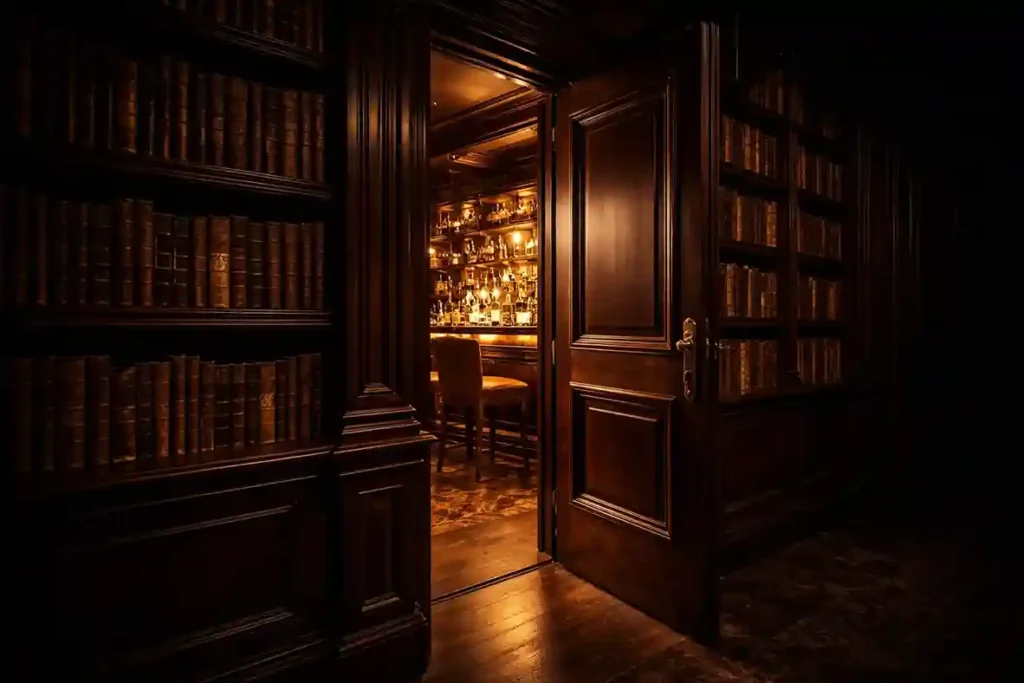
Critical Warning on Hinges: A common DIY mistake is using standard door hinges for a bookcase door. Standard hinges will fail. They cannot handle the “torque” (leverage) of a deep shelf filled with books. You must use a heavy-duty Pivot Hinge that transfers weight to the floor.
Soundproofing (The Invisible Layer)
A speakeasy must be quiet. Do not use egg cartons or acoustic foam to “soundproof” your room. Foam only stops echoes inside the room. To stop sound from leaking out to the rest of the house, you need mass. Install solid-core doors and consider a second layer of drywall with damping compound.
Ambiance and Atmosphere
Amber Lighting Layering
Lighting makes or breaks this room. Never use a central overhead ceiling light. This concept relies on ‘pockets of light’ using 2200K bulbs (Candlelight warm) to highlight specific textures while leaving corners in shadow.
💡 Lighting Cheat Sheet: Don’t Buy the Wrong Bulb
Most “Warm White” LEDs are too bright for a speakeasy. Use this scale to buy the right temperature:

The Art of Lounge Decor
The furniture should encourage sitting for hours. Choose deep armchairs, tufted sofas (Chesterfield style), and low coffee tables. For a truly cohesive look, select statement seating pieces that complement the dark, moody textures of the room. For a truly cohesive look, select statement seating pieces that complement the dark, moody textures of the room. The goal is to create “conversation pockets” rather than a stiff, formal seating arrangement.
Chesterfield Lounge
Authentic speakeasies were exclusive. Don’t try to cram 20 seats into a small room. Focus on a single, high-quality seating area centered around a low table, perfect for intimate conversation and slow sipping.

Furniture & Decor Specifics
Prohibition-Era Artifacts
Decorate with intention. Search antique shops for items that tell a story: an old rotary phone, vintage cash registers, or glass decanters.
Craftsmanship
Prioritize real materials. A solid wood bar top feels different than laminate. Real brass hardware ages well; painted plastic peels. Since the room is likely small, you can afford to spend a bit more on high-quality materials because you need less of them.
The Bar as Centerpiece
Jeweled Bar
The bar is the stage. Ensure it is functional for the bartender but visually stunning for the guest. This idea highlights the sparkle of glass and liquid against dark, matte wood, creating a “jewel box” effect.

Cocktail Focus
You don’t need a fully stocked liquor store. Focus on the essentials for classic cocktails: Whiskey, Gin, and Bitters. Display your glassware openly. The sparkle of glass against dark wood is a key visual element of the style.
Creating the Experience
Technology Integration
This is where 1920 meets the 2020s. Use smart plugs to control your lamps. You can set a scene called “Speakeasy” on your phone that dims the lights and starts a jazz playlist instantly. Hide your smart speakers behind books or inside vintage radio shells so the tech is felt but not seen.
Live Entertainment
If space permits, a piano or a designated corner for a record player adds life to the room. The ritual of flipping a vinyl record fits the slow, deliberate pace of a speakeasy.
Conclusion
Building a speakeasy is a renovation of feeling, not just function. By focusing on the “invisible” elements—the hidden entry, the warmth of 2200K lighting, and the weight of a solid door—you create a destination within your own home. You don’t need a massive budget; you just need to commit to the “secret” and prioritize atmosphere over occupancy. Start by changing your lightbulbs and painting a wall dark, and you will feel the mood shift immediately—welcome to the club.