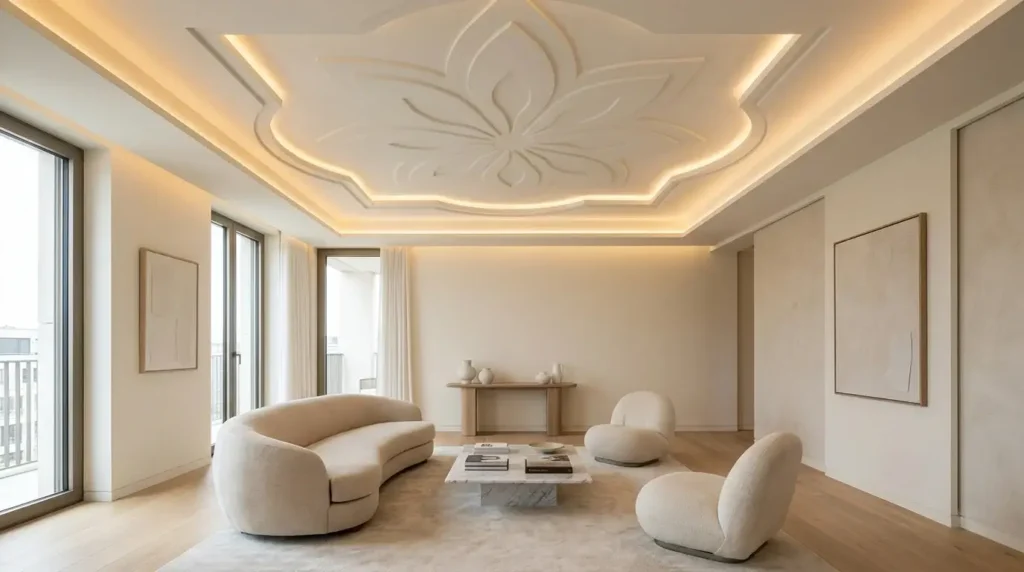
Paint alone can only do so much in a freshly renovated home. Flat walls often make a space feel unfinished rather than completely designed.
This guide covers four practical wall upgrades that give a remodel a high-end, custom look without the cost of a full renovation.
Written for homeowners and DIYers working through a remodel or refresh, it evaluates feature wall ideas, wall paneling for remodels, texture wall decor, and material selection across real-world applications.
You will finish with a clear checklist for choosing the upgrade that fits both your home’s style and your personal maintenance comfort level.
The Power of Smart Wall Design

Paint is a starting point, not a finish line. In a remodeled home, the surfaces that get the most attention carry texture, dimension, or deliberate contrast.
One upgraded wall can shift how the entire room is perceived by anyone entering the space. It seamlessly makes standard finishes around it appear far more intentional and curated.
We cover four primary upgrade categories, including feature walls, vertical elements, texture and pattern, and efficient, premium-looking materials.
These are strategic design moves used by interior designers that have now become highly accessible to homeowners.
Through better-engineered products and simpler installation formats, achieving an architectural look is easier than ever.
This content serves homeowners mid-remodel or planning one, design-focused DIYers, and budget-conscious buyers.
These surface upgrades work beautifully across various room types, interior styles, and specific square footage ranges.
They consistently deliver results that look like they cost significantly more than the initial investment.
Pros and Cons of Faux Stone Wall Panels

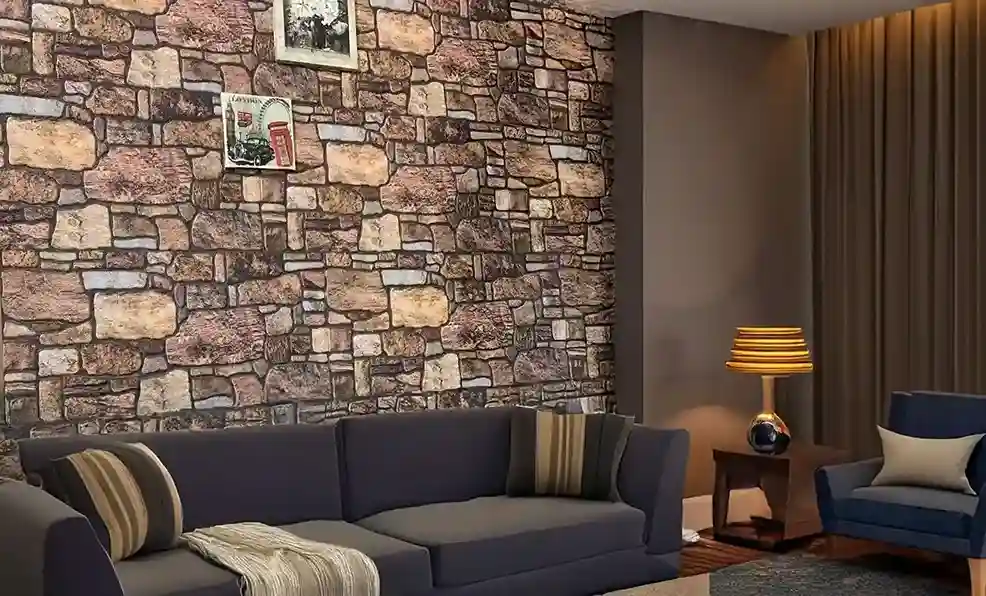
Dundee Deco’s textured faux stone panel category has matured significantly as a highly capable wall upgrade material.
Modern panels made from PVC and EPS deliver a level of authentic realism and durability that makes them a serious design option.
Acknowledging the strict functional distinction between this category and natural stone helps homeowners make a truly informed choice.
| Feature | Pro or Con | Explanation |
|---|---|---|
| Installation weight | Pro | Lightweight PVC and Styrofoam construction eliminates the need for structural reinforcement, allowing panels to be installed by one person. |
| Realistic texture | Pro | Molded directly from actual stone references, delivering consistent texture and sizing that closely mimics the look of real masonry. |
| Versatile use | Pro | Weatherproof options are readily available for demanding outdoor applications, including facades, patios, and porches. |
| Moisture resistance | Pro | Stain and spill-resistant surface with zero grout lines makes it ideal for kitchen backsplashes and moisture-adjacent interior spaces. |
| Paintability | Mixed | Some PVC panels can be painted to match decor. |
Faux Stone Wall Panels Ratings
| Criteria | Rating |
|---|---|
| Functionality | 9/10 |
| Durability and Build Quality | 8.5/10 |
| Ease of Installation | 9/10 |
| Long-Term Maintenance | 8.5/10 |
| Value for Money | 9.5/10 |
Functionality
Faux stone wall panels perform seamlessly across applications like fireplace surrounds, entryway accent walls, and kitchen backsplashes.
They do not require the heavy moisture barriers, structural reinforcement, or professional trades that real masonry demands.
The completely grout-free surface design simplifies both initial installation and long-term upkeep.
For a remodeling audience, the incredible functional range of a single product line is a highly meaningful advantage.
Durability and Build Quality
Weatherproof formulations hold up perfectly against seasonal temperature cycling, humidity, and intense UV exposure.
EPS panels perform incredibly well in controlled interior environments and bring the added benefit of valuable thermal resistance.
Neither material warps, cracks, or delaminates under standard residential conditions when installed correctly.
Ease of Installation
One of the clearest advantages of faux stone wall panels is how drastically they simplify the installation process.
The lightweight construction means a single installer can work confidently without additional structural support.
Panels are sized consistently for predictable layout planning, and no specialized masonry tools are required.
This straightforward process translates directly to lower labor costs and a significantly shorter project timeline for the homeowner.
Long-Term Maintenance
Faux stone wall panels require minimal ongoing maintenance compared to the demanding upkeep of natural stone.
The stain-resistant surface simply wipes clean with a basic, damp cloth and mild soap.
Homeowners avoid expensive specialty stone cleaners, tedious grout brushes, and annual sealing appointments entirely.
Fast touch-up of any minor surface scratches is straightforward and completely bypasses the need for professional intervention.
Value for Money
Priced carefully between $9.99 and $399.99, depending on panel scale, these panels offer an exceptionally compelling value proposition.
The deep savings come from much lower material costs, completely eliminated labor fees, and zero structural modification requirements.
Free shipping on standard-size panels further reduces the total renovation project outlay.
For homeowners working to achieve high-end home upgrades within a defined budget, the cost-per-impact ratio is nearly impossible to match.
The most effective remodeling decisions are not the most expensive ones; they are the most deliberate ones.
A single surface, chosen with intention and executed with care, can reframe an entire room.
Faux Stone Panels vs Natural Stone
Natural stone cladding and faux stone wall panels are both used to deliver a gorgeous masonry-inspired finish.
However, they differ substantially in overall cost, physical weight, installation complexity, and long-term maintenance demands.
This exact comparison focuses directly on surface application, performance, and use case criteria that matter most to a homeowner.
Natural stone is selected here as the direct comparison because it is the primary material that faux stone panels flawlessly replicate.
Natural stone undeniably retains inherent material prestige and strong resale perception advantages in high-end structural markets.
However, for the vast majority of residential remodeling projects, faux stone wall panels deliver the visual outcome with significantly lower cost.
They offer considerably faster installation and a fraction of the structural and maintenance burden.
Ultimately, faux stone panels easily win on cost, installation ease, long-term maintenance, and overall design range.
| Feature | Faux Stone Wall Panels | Natural Stone Cladding |
|---|---|---|
| Installed cost | DIY-possible; minimal added cost | $15-$30+ per sq ft with professional labor |
| Weight | Lightweight; no reinforcement needed | Heavy; requires structural wall assessment |
| Installation complexity | DIY-friendly with standard tools | A professional mason typically requires |
| Maintenance | Wipe-clean; no sealing or repointing | Requires periodic sealing and grout care |
| Key Insight: Natural stone is ideal for structural builds, but faux panels win for residential accents. They eliminate heavy masonry labor, saving thousands while delivering the same high-end architectural finish. |
4 Wall Upgrades That Elevate Remodels

A remodel gains its beautifully finished quality not from the sum of all its decisions, but from a few highly well-placed ones.
Walls are the largest visual surface in any room, and they are frequently the last thing a renovation budget carefully addresses.
The four upgrades below represent strategic design moves that interior designers instinctively reach for when they need a room to feel beautifully complete.
Each can be approached easily as a standalone project or cleverly incorporated into a much broader remodeling design plan.
- Create a Feature Wall That Anchors Rooms
Every well-designed room has a powerful focal point that gives the eye somewhere to comfortably land.
In a remodel, the feature wall is the fastest and most efficient way to immediately establish that architectural anchor.
High-visibility positions like the wall behind a vanity or facing the main entry point are completely ideal for a material upgrade.
Keep the surrounding finishes clean and simple, so the feature wall does its absolute best work against a highly restrained backdrop.
For entryways and foyers especially, the very first wall a visitor encounters instantly sets the tone for the entire home.
A surface that clearly carries texture, pattern, or dimensional depth powerfully signals a highly deliberate design sensibility.
Feature wall ideas for this location include heavily textured panels, bold wallcovering, and classic architectural trim details.
These premium elements are easily scalable to appropriately match the room’s ceiling height and natural proportions.
- Use Vertical Elements to Lift Ceilings
Ceiling height is one of the most heavily coveted qualities in modern residential architecture.
Vertical lines immediately draw the eye upward, beautifully elongating the perceived height of a wall and making standard ceilings read as much taller.
Vertical board-and-batten configurations, tall wall paneling formats, and vertically oriented tile layouts confidently achieve this visual effect.
Any selected trim, panels, and architectural details should consistently reinforce the upward direction rather than harshly interrupt it.
This technique is particularly effective in frustratingly narrow hallways, small powder rooms, and horizontally compressed bedrooms.
A room that feels visually cramped can suddenly feel highly generous and airy when the walls themselves seem to reach elegantly upward.
Simply pair these vertical elements with a light ceiling color that seamlessly matches or is slightly lighter than the walls.
This completes the sophisticated illusion beautifully without requiring any highly expensive structural work.
- Add Depth with Texture and Pattern
Flat, painted walls have only one dimension, while a strongly textured wall introduces color, distinct shadow, and real physical depth.
That specific combination is exactly what separates a basic room from a space that feels intentionally and professionally designed.
Texture creates incredible visual interest at close range and immediately adds welcoming warmth to how a room reads from across the space.
The design range widely spans from subtle linen-impression wallcoverings to the highly pronounced dimensionality of geometric 3D formats.
For homeowners looking for a high-impact texture wall decor option that visually elevates multiple rooms, material selection becomes an incredibly practical decision.
In powder rooms, living room feature walls, fireplace surrounds, and mudroom entries, the stone-textured surface brings both visual weight and wonderful tactile authenticity.
Incorporating materials like faux stone wall panels offers the beautifully layered depth of real masonry in a lightweight format.
This effectively allows for a highly dramatic transformation without requiring any structural modification, expensive specialist labor, or messy grout work.
- Choose Premium Materials That Install Efficiently
In any major remodel, some finish decisions absorb an intensely outsized portion of the budget without delivering appropriately proportional visual impact.
Wall materials fall reliably into a much smarter category that actively delivers substantial aesthetic results at a mere fraction of the cost.
The ultimate measure of a smart wall material choice is simply the final installed cost relative to the visual output.
Homeowners must realistically consider how much the finished surface looks like it costs, and exactly how long it beautifully holds that look.
Wall paneling for remodels has rapidly matured as a highly specialized and innovative product category.
Modern PVC and EPS formats now flawlessly replicate textures at a visual fidelity that reads as incredibly premium in person.
For homeowners who demand high-end home upgrades without hiring a costly general contractor, engineered decorative panels absolutely represent a genuine quality-per-dollar advantage.
Consistent product sizing and highly DIY-friendly installation formats ensure the gap between material cost and final installed cost is much narrower than ever.
| Quote: “Never underestimate the power of a single textured wall. It introduces shadow, depth, and physical dimension, completely redefining the architecture of a standard, boxy room into a custom-curated space.” – Interior Design Professional |