Large retail construction projects move fast, involve multiple trades, and demand a high level of coordination to meet strict opening deadlines. Whether building new retail spaces, renovating big-box stores, or completing tenant buildouts in shopping centers, contractors are working in environments where timing, access, and organization are critical.
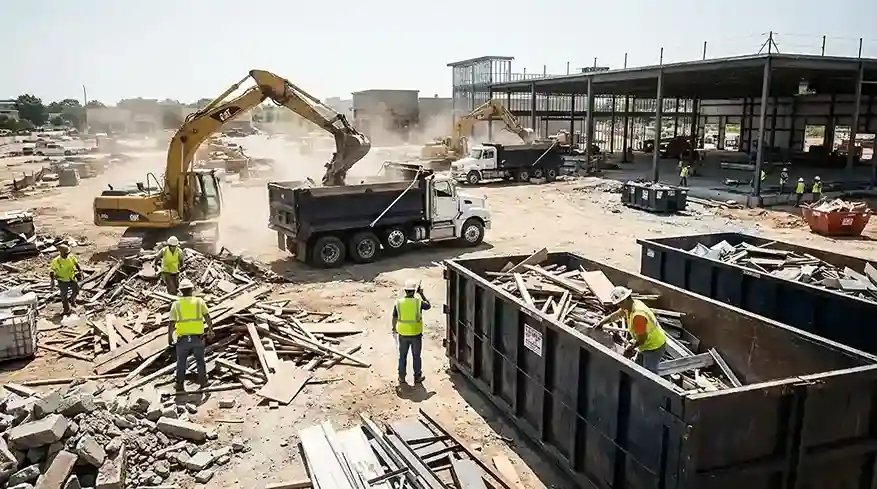
Debris removal plays a central role in keeping these projects on track. Retail construction generates continuous waste from demolition, framing, mechanical work, finishes, and packaging. At the same time, these projects often take place in active commercial areas where access must be maintained for deliveries, neighboring businesses, and sometimes customers.
Without a structured approach to debris removal, materials can quickly accumulate, restrict movement, and slow down progress. For contractors, coordinating waste removal effectively is essential to maintaining workflow, reducing delays, and delivering projects on schedule.
Why Retail Construction Requires Tight Waste Coordination
Retail projects differ from many other construction environments because of their pace and visibility. Schedules are often driven by lease agreements and planned opening dates, leaving little room for delays.
At the same time, multiple trades are frequently working in the same space or in adjacent areas. Demolition crews, electricians, HVAC installers, and finish teams may all be active within a short timeframe.
This overlap creates a constant flow of debris that must be managed without interfering with ongoing work.
In addition, retail projects often occur in locations with limited space, shared access points, and strict requirements for maintaining a clean and organized appearance.
These factors make waste coordination a critical part of project planning.
Aligning Debris Removal with Construction Phases
Retail construction projects move through distinct phases, each producing different types and volumes of debris. Early demolition generates large amounts of material, while later stages produce smaller but continuous waste such as packaging and trim.
Coordinating debris removal with these phases helps maintain efficiency.
For example, demolition debris should be removed quickly to allow framing and installation to begin without obstruction. As the project transitions to finishing work, maintaining a clean environment becomes even more important.
Aligning waste removal with each phase ensures that debris does not interfere with progress.
Phase-based coordination supports smoother transitions throughout the project.
Handle bulk waste fast to prevent site congestion.
Maintain steady removal to support active trades.
Clear pathways for materials and crew movement.
Remove small debris continuously to keep site clean.
Managing High-Volume Debris During Demolition
Demolition is often the most debris-intensive phase of retail construction. Removing walls, flooring, fixtures, and existing systems can generate large volumes of material in a short period.
If this debris is not removed promptly, it can quickly overwhelm the site.

Contractors should plan for increased disposal capacity during demolition, ensuring that containers are available and that removal schedules match the pace of work.
Keeping debris moving during this phase prevents bottlenecks and allows crews to transition smoothly into the next stage.
Managing high-volume debris effectively sets the tone for the rest of the project.
Maintaining Clear Access for Deliveries and Crews
Retail construction sites depend on efficient movement of both materials and people. Deliveries must arrive on time, and crews need clear pathways to perform their work.
Debris that accumulates in access routes can create immediate problems.
Contractors should establish designated pathways for debris removal that do not interfere with delivery zones or high-traffic areas.
Maintaining clear access helps:
- Prevent delays in material deliveries
- Improve crew mobility
- Support overall site organization
Access management is closely tied to effective debris coordination.
Keeping pathways clear is essential for maintaining productivity.
Strategic Placement of Containers
Container placement is a key factor in coordinating debris removal on retail projects. Containers must be accessible for crews while also fitting within the constraints of the site.

Retail construction often takes place in areas with limited space, shared parking lots, or strict placement requirements.
Contractors should position containers where they:
- Minimize travel distance for debris removal
- Avoid blocking customer or tenant access
- Allow for efficient pickup and delivery
In some cases, placement may need to be adjusted as the project progresses.
Strategic positioning supports efficient waste flow and reduces unnecessary labor.
Coordinating with Multiple Trades
Large retail projects involve multiple trades working simultaneously, often in close quarters. Without coordination, debris removal can conflict with other activities.
For example, removing debris during peak installation periods can create congestion and slow down work.
Contractors should communicate clear expectations for debris handling and coordinate removal schedules to minimize disruption.
This may involve assigning responsibility for cleanup within each trade or designating specific times for debris removal.
Effective coordination helps maintain a steady workflow and reduces conflicts.
Managing Continuous Debris During Finishing Phases
As retail projects move into finishing phases, the nature of debris changes. Large demolition materials are replaced by smaller items such as packaging, trim, and installation scraps.
While these materials are less bulky, they are generated continuously and can still create clutter if not managed properly.
Maintaining consistent debris removal during these phases helps keep the site clean and organized.
A clean environment is especially important as projects approach completion and inspections.
Continuous removal supports both efficiency and presentation.
Reducing Labor Through Efficient Debris Flow
Inefficient debris handling increases labor costs and slows down progress. When materials are staged before removal, workers must handle them multiple times, adding unnecessary effort.
Direct disposal into containers is a more efficient approach.
By removing debris as it is generated, crews can focus on their primary tasks without interruption.
This reduces labor demands and improves overall productivity.
Efficient debris flow is one of the simplest ways to maintain control over project costs.
Waste goes straight into containers.
Workers avoid moving debris multiple times.
Crews stay focused on main tasks.
Reduced labor leads to better efficiency.
Working with Reliable Waste Removal Providers
Coordinating debris removal on large retail projects often requires support from experienced waste removal providers. These providers help ensure that containers are available when needed and that pickups are scheduled appropriately.
Contractors frequently work with providers such as Waste Removal USA to align waste removal with project timelines and site conditions.
Reliable service helps prevent disruptions caused by full containers or delayed pickups.
Strong coordination allows contractors to adjust plans as the project evolves.
Having a dependable provider is essential for maintaining consistent operations.
Adapting to Changing Site Conditions
Retail construction sites are dynamic. As work progresses, areas are completed, new zones are opened, and access routes may change.
Debris removal strategies must adapt to these changes.
This may involve relocating containers, adjusting removal schedules, or redefining debris pathways.
Regular evaluation helps contractors stay ahead of these changes and maintain efficiency throughout the project.
Flexibility is key to managing complex construction environments.
Avoiding Common Coordination Mistakes
Several common mistakes can disrupt debris removal on retail projects. These include underestimating debris volume, failing to align removal with construction phases, and placing containers in locations that interfere with access.
Another common issue is poor communication between trades, which can lead to congestion and delays.
Avoiding these mistakes requires proactive planning and consistent oversight.
A structured approach helps prevent inefficiencies and keeps projects on track.
Debris piles up and blocks work areas.
Waste is removed in sync with each phase.
Blocked routes delay deliveries and crews.
Designated paths keep movement smooth.
Trades interfere with each other.
Schedules reduce overlap and conflict.
Supporting Project Efficiency and Timely Completion
Effective debris coordination contributes directly to the success of retail construction projects. When waste is managed properly, crews can work without interruption, deliveries can proceed smoothly, and the site remains organized.
This leads to faster project completion, reduced labor costs, and improved coordination across all phases of work.
Contractors who prioritize debris removal gain a significant advantage in managing fast-paced retail builds.
Efficiency improves when waste is treated as part of the workflow.
Coordinating debris removal during large retail construction projects requires careful planning, clear communication, and ongoing adjustment. The fast-paced nature of these projects, combined with limited space and multiple trades, makes effective waste management essential.
For contractors, aligning debris removal with construction phases, maintaining clear access routes, and working with reliable providers helps keep projects on schedule. Strategic container placement and continuous cleanup further support efficient operations.
By integrating waste removal into the overall project strategy, contractors can reduce delays, improve productivity, and deliver successful retail construction projects on time.