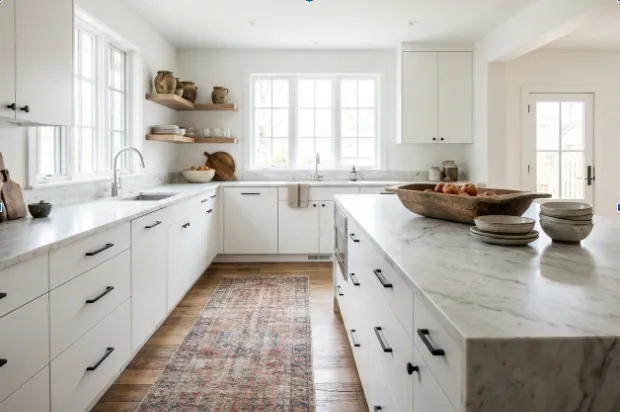
You finally smell fresh paint, but the newly remodeled room still feels inexplicably hollow and unfamiliar.
Adding finishing touches after remodeling quickly transforms a blank space into a warm sanctuary.
We often call these steps simple, but they actually represent the smartest use of your decorating energy right now.
A few strategic choices will quickly shift the atmosphere without requiring a massive budget.
1. Hang Wall Art at the Right Scale

The most common mistake regarding home decor after renovation is leaving expansive new walls completely bare.
Art and frame groupings must feel properly proportional to the wall they occupy.
To solve this, a gallery wall serves as the most flexible solution for post-renovation decorating.
If you want matching finishes without sourcing friction, try a hookless gallery wall frame set from Americanflat.
Coordinated finishes, consistent mat sizing, and included hardware let you focus purely on the art itself.
To find foolproof gallery wall layout ideas, start by mapping out your vision using simple paper templates.
Cut paper matching your frame sizes, tape them up, and adjust until perfectly balanced. Mix family photos and travel prints within your frames for true authenticity.
| Pro Tip: Don’t guess where to place your nails on new walls. Use paper templates to test the layout first. This simple trick ensures your gallery wall looks professional without causing accidental damage. |
2. Style Shelves With Meaningful Objects

Post remodel excitement creates a temptation to fill every empty ledge, but careful curation is much more effective.
Well-chosen accent pieces for shelves do important visual work by injecting character into stark new rooms.
Include objects with genuine personal stories alongside unique items to keep the newly built space grounded.
For a charming focal point, consider adding whimsical Lori Mitchell figurines from Michelle’s aDOORable Creations.
You can easily achieve visual balance by following a few practical shelf styling tips.
- Use the rule of three by grouping objects in odd numbers for natural rhythm.
- Vary height within each grouping by mixing tall vases with low book stacks.
- Mix textures across each grouping by combining smooth ceramics with tactile elements.
- Leave ample breathing room between groupings to make each object stand out clearly.
Your emotional goal is ensuring these surfaces reflect your actual life instead of a staged open house.
A shelf displaying three considered pieces reads as beautifully curated and highly intentional.
Conversely, a shelf stuffed with random decorative pieces simply reads as crowded and completely overwhelming.
3. Rebuild Your Color Story Before Buying

A remodel almost always introduces unfamiliar new tones into a home. Fresh wall paint, updated tile, or modern cabinetry finishes often quietly shift your existing color language.
You might not notice this subtle shift until your older furniture suddenly looks entirely disconnected.
Before shopping for new decor, establish a cohesive color story using what you already own.
Walk from room to room and identify two or three repeating colors present in your upholstery or rugs.
These familiar elements become your loose unifying palette moving forward. Lay printed room photos side by side to spot subtle color disconnects before spending money on new pieces.
Pull one accent color from your kitchen and let it reappear in a nearby living space.
Identify one or two focal points per room before decorating any additional surfaces.
This prevents the scatter and fill impulse that frequently leads to expensive purchases and eventual hoarding.
In fact, studies show that severe domestic clutter accumulation significantly predicts problematic hoarding symptoms in younger adults later in life.
Taking time to limit your color palette ensures you only buy pieces you truly need.
4. Mix Old Pieces So the Room Has a Past

A brand new room often feels cold precisely because everything inside it is perfectly spotless and new.
There are no gently worn edges, no layered history, and no visual evidence of daily human life.
To combat this sterile atmosphere, thoughtfully reintroduce your pre-renovation pieces rather than replacing everything at once.
A vintage lamp or a wooden tray with a small scratch tells a compelling and warm story.
Creating a room with a distinct past adds vital personalization that newer spaces desperately need.
Research highlights that space, access to nature, and thoughtful personalization practices improve well-being significantly in residential home environments.
Contrast between old and new creates visual tension that reads as curated and genuinely lived in.
This purposeful contrast prevents freshly designed rooms from looking like rigid corporate showrooms.
Effective styling often uses eighty percent existing pieces repositioned with intention and twenty percent new additions.
Your gorgeous new remodel simply becomes the elegant backdrop for your ongoing life story.
Textiles offer the absolute fastest way to soften hard, newly installed surfaces and sharp corners.
A well-worn quilt or a faded vintage rug introduces immediate warmth against fresh tile backsplashes.
Finally, intentionally mix your hardware and decorative finishes to create depth.
Blending matte, gloss, natural wood, and brushed metal prevents the boring one-note look that plagues renovations.
Connecting the hard work of remodeling to your unique history brings authentic soul back into the house.
| Key Insight: A room with only brand-new items often lacks soul. Introducing vintage pieces or heirlooms creates a visual bridge between the past and your new renovation, making the space feel instantly more authentic. |
The Bottom Line
That initial feeling of a blank, unfamiliar room is not a stressful problem to solve. Instead, treat it as an open invitation to put yourself back into the space you worked hard to improve.
Move through these finishing touches after remodeling in a deliberate and highly measured sequence.
Establish your color story first, address the blank walls, style your surfaces, and then intelligently layer in historical pieces.
The ultimate goal is never to create a perfectly decorated and untouchable showcase.
Your real objective is figuring out how to make a new remodel feel cozy, functional, and unmistakably yours.
Embrace this styling phase as a creative reward for surviving the dusty construction process.
Connect the hard work of remodeling to the quiet satisfaction of living well inside what you just built.